 Chelen
Moore Vice
President, Operations The Grayson Group
Seldom does a day pass
that a new pundit doesn’t weigh in on the downsides of social media. The dangers and depersonalization of social media
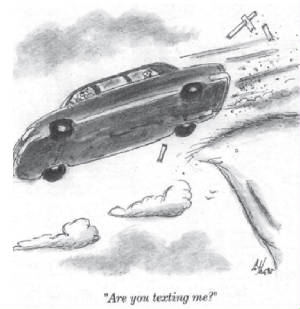
are beginning to show themselves in sharp relief. The biggest casualty we see every day is the absence of face-to-face (F2F)
contact between sellers and their prospects/customers. It seems to us that more and more often, intelligent and competent
salespeople are less adept at and comfortable with F2F interaction with the buyers they seek to attract. Their default positions
are email, texting, tweeting, Linked-in, Facebook, voicemail – anything but good old-fashioned F2F conversations. We
acknowledge that it’s easier to fire off an email. But need we remind you that even the most wellcrafted emails are
subject to misinterpretation both as to content and intent? There’s no ability to read body language or discern voice
inflections. The time to revisit the effectiveness of the so-called virtual selling model is past. What’s needed is
more “windshield time.”
LIGHTBULB MOMENT: Set a specific weekly goal for the number of F2F meetings/interactions with
potential buyers, five (5) is an ambitious target.
 |
 |
|
|
Dilbert is probably
the only cartoon strip in the world that is equally at home in Business Sections (e.g., San Francisco Chronicle, Fort Worth Star Telegram) and daily Comics
pages. Dilbert’s creator, Scott Adams, first conceived the strip while working in a cubicle
at Crocker National Bank. His “material” then and now floods in daily from other corporate cubicle dwellers. Dilbert’s
humor hits close to home more often than not. Forwarding a particularly appropriate Dilbert strip as a way of nurturing important
relationships is fun and often prompts return emails or phone calls.
LIGHTBULB MOMENT: Anything that stimulates
increased contact frequency is a salesperson’s lifeblood. |
|
|
|
|

There
is no shortage of books on the keys to success. Occasionally a new tome appears containing truly original thinking. Such is
Tony Jeary’s Strategic Acceleration. It is built on and reinforces three underpinnings of success – Clarity,
Focus and Execution. He presents an insightful examination of the elements which yield laser-like focus, including the ability
to consistently:
•
Concentrate on doing things that really matter. • Cut through the clutter to avoid and eliminate distractions. •
Complete predetermined tasks and objectives on time. • Block out yesterday, not worry about tomorrow and do the next
correct thing today.
Strategic Acceleration
provides
much food for thought and is a welcome addition to any professional library. |
|
|
|
|